


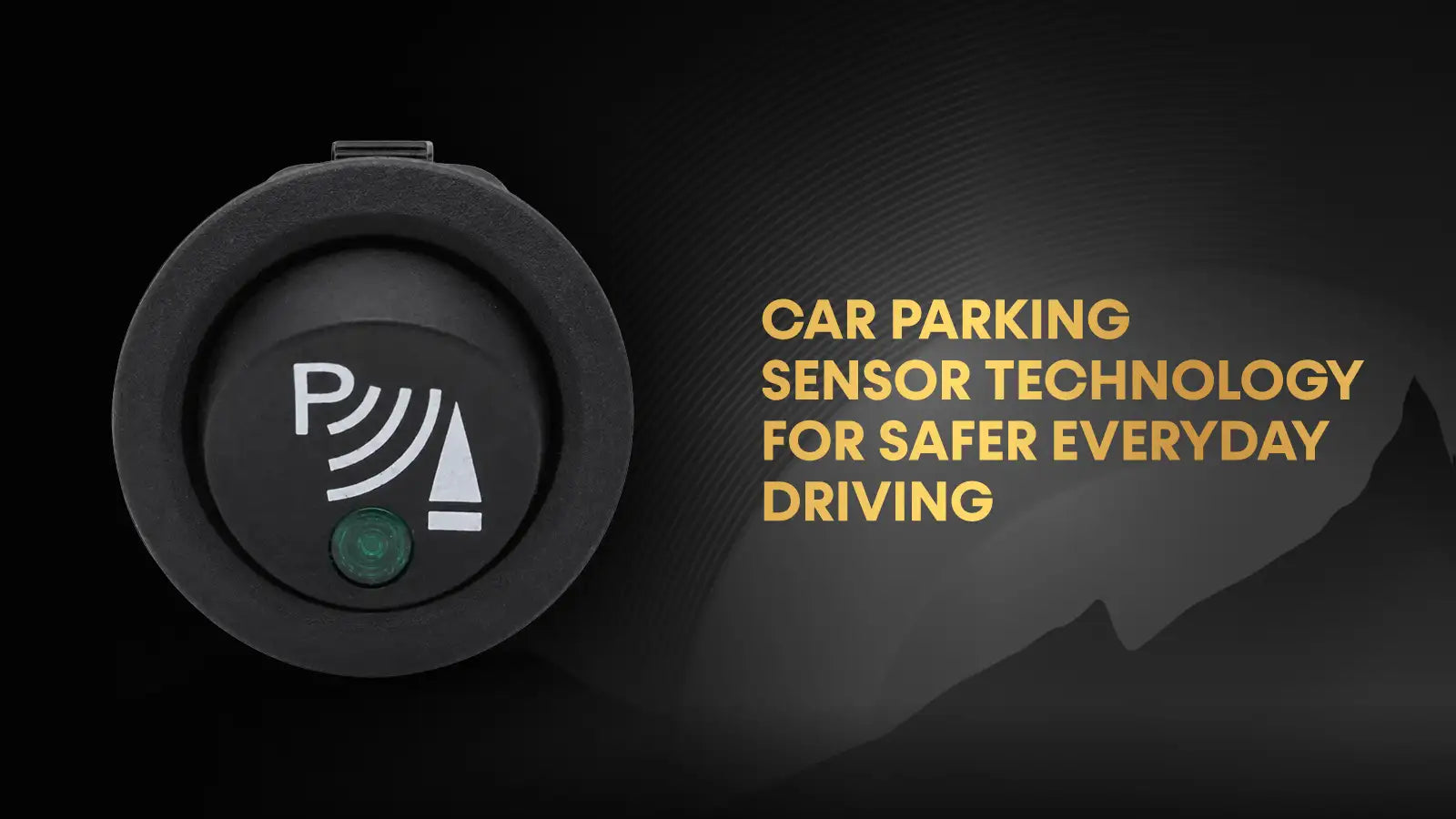
A car parking sensor system has become one of the most practical upgrades for everyday driving, particularly in tight urban spaces and busy car parks. These systems use ultrasonic technology to detect nearby obstacles and alert the driver through sound, light or an on-screen display, reducing the guesswork involved in reversing or manoeuvring into a narrow gap. This article explains how car parking sensor technology works, the different types available, and what to consider before choosing a system for a vehicle.
What Is a Car Parking Sensor
A car parking sensor is a proximity detection device fitted to a vehicle's bumper that alerts the driver when an object is within a set distance. Rather than relying solely on mirrors and judgement, the system provides an additional layer of awareness that becomes especially useful in low-visibility manoeuvres such as reverse parking or pulling into a tight space.
Most systems fall into two categories: rear-only sensors that activate when reverse gear is selected, and combined front and rear systems that provide coverage at both ends of the vehicle. Larger cars, SUVs and vans in particular benefit from front sensors, since the front overhang can be difficult to judge from the driver's seat.
How Does Car Parking Sensor Technology Work
Car parking sensor technology works by emitting ultrasonic pulses from small sensors mounted in the bumper, then measuring how long each pulse takes to bounce back after hitting a nearby object. This return time is converted into a distance reading, which the control unit uses to trigger an alert.
As the vehicle gets closer to an obstacle, the alert frequency increases, moving from an occasional beep to a rapid or continuous tone at very close range. Some systems pair this audible alert with an LED display or digital on-screen readout showing exactly how much space remains, giving a more precise sense of clearance than sound alone.
Benefits of Car Parking Sensor Technology
Fitting a car parking sensor system brings a noticeable improvement to daily manoeuvring, particularly for larger vehicles or tight parking environments.
• Reduces the risk of minor collisions when reversing or parking
• Gives clear, real-time distance feedback through sound, light or display
• Improves confidence when parallel parking on busy streets
• Assists with judging front overhang on SUVs, vans and larger cars
• Works automatically with reverse gear, requiring no extra input from the driver
Key Features
Several features distinguish one parking sensor system from another and are worth checking before a purchase decision is made.
• Ultrasonic sensors offering reliable distance detection within a set range
• Audible buzzer, LED indicator or digital display depending on the system
• Flush fit sensor housings that sit level with the bumper for a discreet finish
• Colour-matched sensor options to suit the vehicle's paintwork
• Automatic activation linked to the reverse gear trigger
Common Challenges and Solutions
Sensors that miss narrow or angled objects
Ultrasonic sensors rely on sound waves bouncing back from a surface, so narrow poles or steeply angled surfaces can sometimes be missed. Correct sensor spacing and angling during installation reduces this risk considerably.
False alerts in tight or cluttered environments
Multi-storey car parks with kerbs, pillars or trolleys nearby can trigger frequent alerts. Systems with adjustable sensitivity settings, fitted correctly, help reduce unnecessary warnings without compromising genuine detection.
Sensors that look aftermarket
A visible, mismatched sensor can look like an obvious add-on rather than a factory feature. Flush fit, colour-matched sensor systems address this by sitting level with the bumper surface for a cleaner appearance.
Practical Applications
• Reversing into tight residential parking spaces
• Parallel parking on narrow city streets
• Manoeuvring larger vehicles such as SUVs and vans in car parks
• Judging front clearance when pulling into a garage or driveway
• Providing an added layer of awareness for new or less confident drivers
Parking Sensor System Comparison
|
Factor |
Standard Sensors |
Flush Fit Sensors |
Camera-Only Systems |
|
Detection method |
Ultrasonic proximity detection |
Ultrasonic proximity detection |
Visual feed only, no proximity alert |
|
Appearance |
Visible circular sensor on the bumper |
Sits level with the bumper for a discreet finish |
No visible sensor, camera lens only |
|
Coverage options |
Rear only, or front and rear combined |
Rear only, or front and rear combined |
Typically rear view only |
|
Best suited for |
Budget-conscious upgrades |
A factory-style, colour-matched finish |
Drivers who prefer a visual reference over audible alerts |
|
Typical alert type |
Audible buzzer, LED or digital display |
Audible buzzer, LED or digital display |
On-screen visual only |
Factors to Consider Before Choosing
• Decide whether rear-only or combined front and rear coverage is needed
• Check whether a flush fit finish is preferred over a standard visible sensor
• Confirm colour-matching options are available for the vehicle's paintwork
• Consider whether an LED buzzer or digital display suits the vehicle's dashboard
• Arrange professional installation to ensure correct sensor spacing and wiring
Common Questions People Ask
Most enquiries about car parking sensor technology centre on how reliable the detection is, whether front sensors are worth adding alongside rear ones, and whether the sensors can be matched to the vehicle's colour. In short, ultrasonic detection is highly reliable when installed correctly, front sensors add real value on larger vehicles, and colour-matched or flush fit sensors are widely available for a factory-style finish.
Frequently Asked Questions
How do parking sensors know how close an object is?
The system measures the time taken for an ultrasonic pulse to bounce back from an object and converts that into a distance reading, adjusting the alert frequency as the distance decreases.
What is included in a typical parking sensor kit?
A standard kit includes the sensors, a control module, a wiring harness and an audible buzzer or display unit, with installation hardware included depending on the system chosen.
Can front and rear sensors be added to a vehicle that only has rear sensors fitted?
Yes, a front sensor system with its own switch can be added separately, giving full coverage at both ends of the vehicle.
Do parking sensors work in all weather conditions?
Ultrasonic sensors generally perform well in rain and cold conditions, though heavy mud or ice build-up on the sensor face can temporarily affect accuracy until cleared.
Is professional fitting necessary for parking sensors?
Professional installation is strongly recommended, since correct sensor spacing and angling directly affects detection accuracy and helps avoid blind spots or false alerts.
Can parking sensors be fitted to older vehicles?
In most cases, yes. Universal and vehicle-specific parking sensor kits are available for a wide range of makes and models, including older vehicles without factory-fitted systems.
Key Takeaways
• Car parking sensor technology uses ultrasonic pulses to detect nearby obstacles
• Alerts increase in frequency as the vehicle gets closer to an object
• Front and rear coverage benefits larger vehicles with harder-to-judge overhangs
• Flush fit, colour-matched sensors offer a cleaner, more factory-style finish
• Correct professional installation is key to reliable, accurate detection
Also, Read Car Key Repair Restores Everyday Driving Confidence
Conclusion
Car parking sensor technology continues to make everyday driving noticeably easier, turning tight reverses and narrow gaps into far less stressful manoeuvres. From standard rear-only setups to combined front and rear systems with flush fit, colour-matched sensors, there is a suitable option for most vehicles and driving needs. Autostyle UK fits a full range of parking sensor systems at the Blackburn showroom, with enquiries also welcomed by phone on 01254 427887 for drivers looking to find the right setup for their vehicle.


