


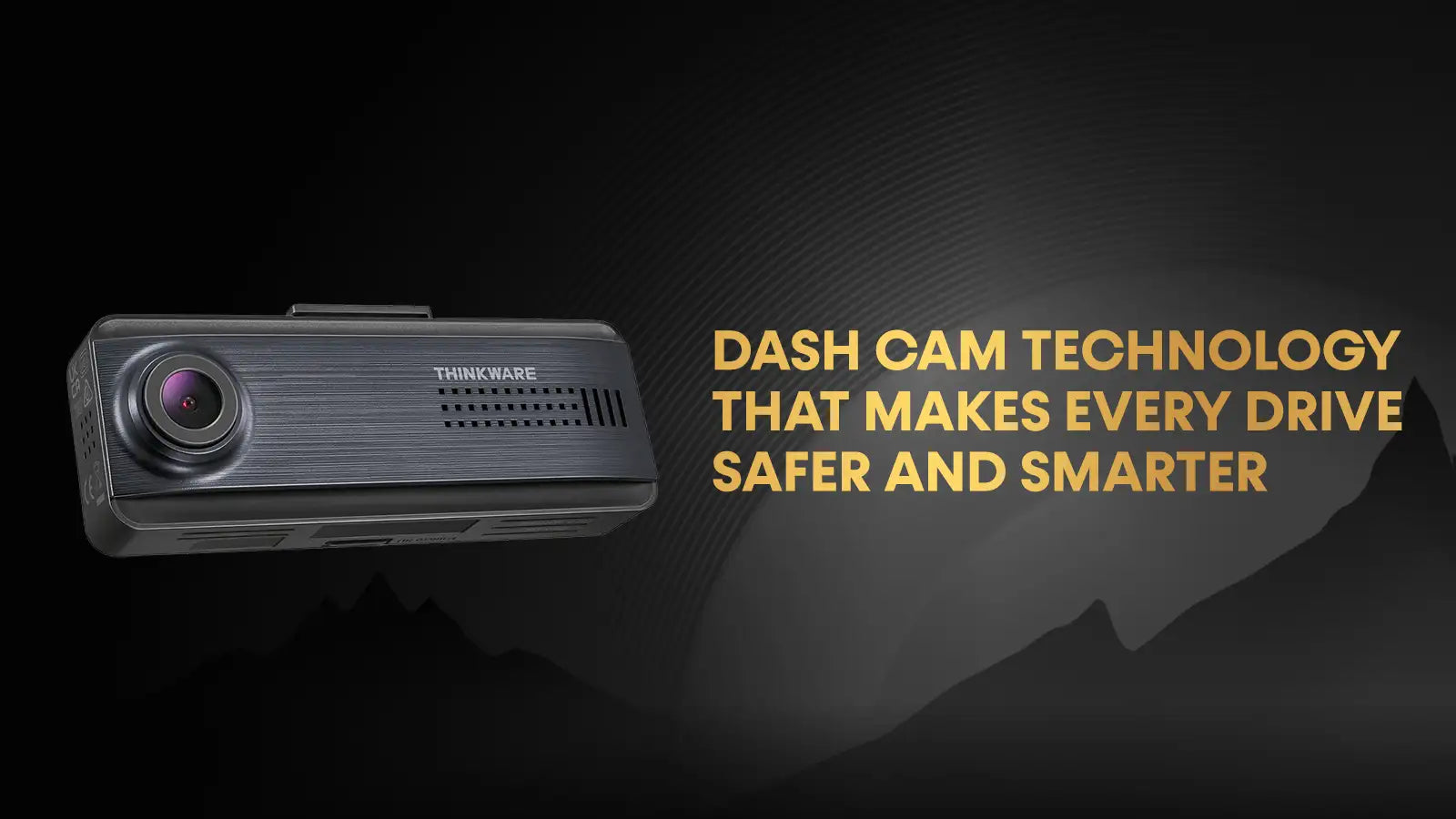
A dash cam is one of the simplest upgrades a driver can make to feel safer and more protected behind the wheel. It records continuous footage of the road, captures evidence in the event of a collision or dispute, and can even monitor a parked vehicle for damage or theft. As dash cam technology has advanced, features such as night vision, GPS logging, and cloud backup have made these devices far more capable than the basic recorders of a few years ago. This guide explains how dash cam technology works, what to look for, and how it fits into a smarter, safer driving setup.
What Is a Dash Cam
A dash cam, short for dashboard camera, is a small, forward-facing (and sometimes rear or interior-facing) camera mounted on the windscreen or dashboard that continuously records video while the vehicle is driven. The footage is stored on a memory card in a loop, meaning older clips are automatically overwritten unless they are locked or saved after an incident.
Dash cams range from basic single-lens units to advanced dual and three-channel systems that record the front, rear, and cabin at the same time. Many modern models also include built-in GPS, Wi-Fi connectivity, and driver assistance alerts, turning what was once a simple recording device into a much smarter piece of in-car technology.
How Does Dash Cam Technology Work
Dash cam technology works by continuously capturing footage in short, looped segments, then automatically saving and protecting a clip whenever the built-in sensor detects an impact, sudden braking, or a collision. This ensures that important footage is preserved even if the memory card would otherwise overwrite it.
Most dash cams rely on a G-sensor, which measures sudden changes in motion, such as heavy braking or a knock to the vehicle. When triggered, the camera automatically locks that section of footage so it cannot be deleted during normal loop recording. Hardwired dash cams take this further with a dedicated parking mode, drawing a small amount of power from the vehicle battery to keep monitoring the car even when it is switched off, which is particularly useful for catching hit-and-run incidents or attempted break-ins in a car park.
Benefits of Installing a Dash Cam
Installing a dash cam gives drivers clear, timestamped evidence in the event of an accident, helps deter fraudulent claims, and can even support lower insurance premiums with some providers. The benefits extend well beyond simply recording a drive.
- Accident Evidence: Footage can clarify fault in a collision, protecting against unfair blame.
- Fraud Protection: Dash cam footage helps counter staged accidents or crash-for-cash claims.
- Parking Security: Parking mode footage can capture hit-and-run damage or attempted theft.
- Peace of Mind: Continuous recording means every journey is documented automatically.
- Insurance Support: Some insurers offer reduced premiums or faster claims processing for dash cam-equipped vehicles.
Key Features to Look For
Not all dash cams offer the same level of protection. A few features consistently separate a genuinely useful dash cam from a basic recorder.
- High-resolution recording, ideally 1080p or above, so number plates and details remain clear.
- Wide dynamic range and night vision for clear footage in low light or glare.
- Built-in G-sensor for automatic incident detection and footage protection.
- Parking mode with hardwire kit support for monitoring while stationary.
- GPS logging to record speed, location, and route alongside the footage.
- Dual or three-channel recording for full front, rear, and cabin coverage.
Common Challenges and Solutions
A few practical issues come up regularly with dash cam ownership. Each has a straightforward fix.
Challenge: The memory card fills up or corrupts over time.
Solution: Use a high-endurance microSD card designed for continuous loop recording, and format it periodically as recommended by the manufacturer.
Challenge: Visible wiring spoils the interior finish.
Solution: Opt for professional hardwiring, which routes cables neatly behind trim panels for a factory-style finish.
Challenge: Parking mode drains the vehicle battery.
Solution: Choose a hardwire kit with a built-in low-voltage cut-off, which stops recording before the battery drops too low to start the car.
Challenge: Footage is too dark at night to be useful.
Solution: Select a dash cam with a wide-aperture lens and dedicated night vision processing rather than relying on resolution alone.
Practical Applications
Dash cam technology serves a wide range of everyday driving situations, not just worst-case scenarios.
- Daily commuting, providing continuous evidence on busy or unfamiliar routes.
- Long motorway journeys, where GPS logging helps document speed and location.
- Overnight and street parking, where parking mode protects against knocks and theft.
- Ride-share and taxi driving, where three-channel systems record the cabin as well as the road.
- Insurance claims, where timestamped footage speeds up the resolution process.
Comparing Dash Cam Types
The table below outlines the main dash cam configurations and who each one suits best.
| Type | Coverage | Best Suited For |
|---|---|---|
| Single-Channel | Records the front of the vehicle only. | Drivers who mainly want front-facing incident evidence. |
| Dual-Channel | Records front and rear simultaneously. | Drivers who want protection from both directions, including rear shunts. |
| Three-Channel | Records front, rear, and cabin interior. | Ride-share, taxi, or fleet drivers who need full coverage. |
| Parking Mode Enabled | Continues monitoring while the vehicle is parked and stationary. | Anyone regularly parking in busy streets or shared car parks. |
Factors to Consider Before Choosing
Choosing the right dash cam depends on coverage needs, installation preferences, and how the footage will be used day to day.
- Whether front-only, dual, or three-channel coverage suits the vehicle and driving pattern.
- Video resolution and low-light performance for clear, usable footage.
- Parking mode requirements and whether a hardwire kit will be needed.
- Storage capacity and card type supported by the unit.
- Whether professional installation is preferred for a clean, factory-style finish.
- Compatibility with the specific make and model of the vehicle.
Common Questions People Ask
Many drivers want to know whether a dash cam is worth the investment, and in most cases the answer comes down to the peace of mind and evidence it provides in the event of a dispute or accident. Installation is another common question, and while some units can be fitted with a simple suction mount and cigarette lighter power, a professionally hardwired setup gives a tidier finish and supports parking mode without the risk of a flat battery. Legality also comes up often, and dash cams are legal to use across the UK provided they are positioned so they do not obstruct the driver's view of the road.
Frequently Asked Questions
Do dash cams affect car insurance premiums?
Some insurers offer discounts or faster claims handling for vehicles fitted with a dash cam, though this varies by provider, so it is worth checking directly with the insurer.
Can a dash cam record while the car is parked?
Yes, with a hardwired parking mode setup, the camera continues monitoring the vehicle using a small trickle of power from the battery, with a cut-off to prevent it from draining fully.
Is it legal to use a dash cam in the UK?
Yes, dash cams are legal in the UK as long as they are mounted so they do not block the driver's view and are positioned correctly on the windscreen.
How long does dash cam footage stay stored before being overwritten?
This depends on the memory card size and video quality, but most cards retain footage for several hours to a few days before older clips are automatically overwritten in the loop.
What is the difference between a hardwired and plug-in dash cam?
A plug-in dash cam draws power from the cigarette lighter socket only while the car is running, while a hardwired dash cam is wired directly into the fuse box, enabling continuous parking mode protection.
Can a dash cam be used as evidence after an accident?
Yes, timestamped dash cam footage is commonly accepted by insurers and can support a claim by showing exactly what happened in the moments before and during a collision.
Key Takeaways
- Dash cam technology continuously records footage and automatically protects clips when an impact is detected.
- Dual and three-channel dash cams offer wider coverage than basic single-lens units.
- Parking mode with a proper hardwire kit protects a vehicle even while it is switched off.
- Resolution, night vision, and GPS logging are the features most worth prioritising.
- Professional installation gives a tidy, factory-style finish and avoids common wiring and battery issues.
Also Read: Why Ghost Immobiliser Security Beats Standard Alarms
Conclusion
A modern dash cam does far more than simply record a drive; it protects against disputes, documents parking incidents, and gives every driver a reliable layer of evidence should something go wrong on the road. Choosing the right setup, from resolution to parking mode, makes the difference between a basic recorder and a genuinely smart safety tool. Autostyle UK supplies and professionally installs a range of front and dual-channel dash cameras, fitted with a clean, factory-style finish at its Blackburn showroom.


