


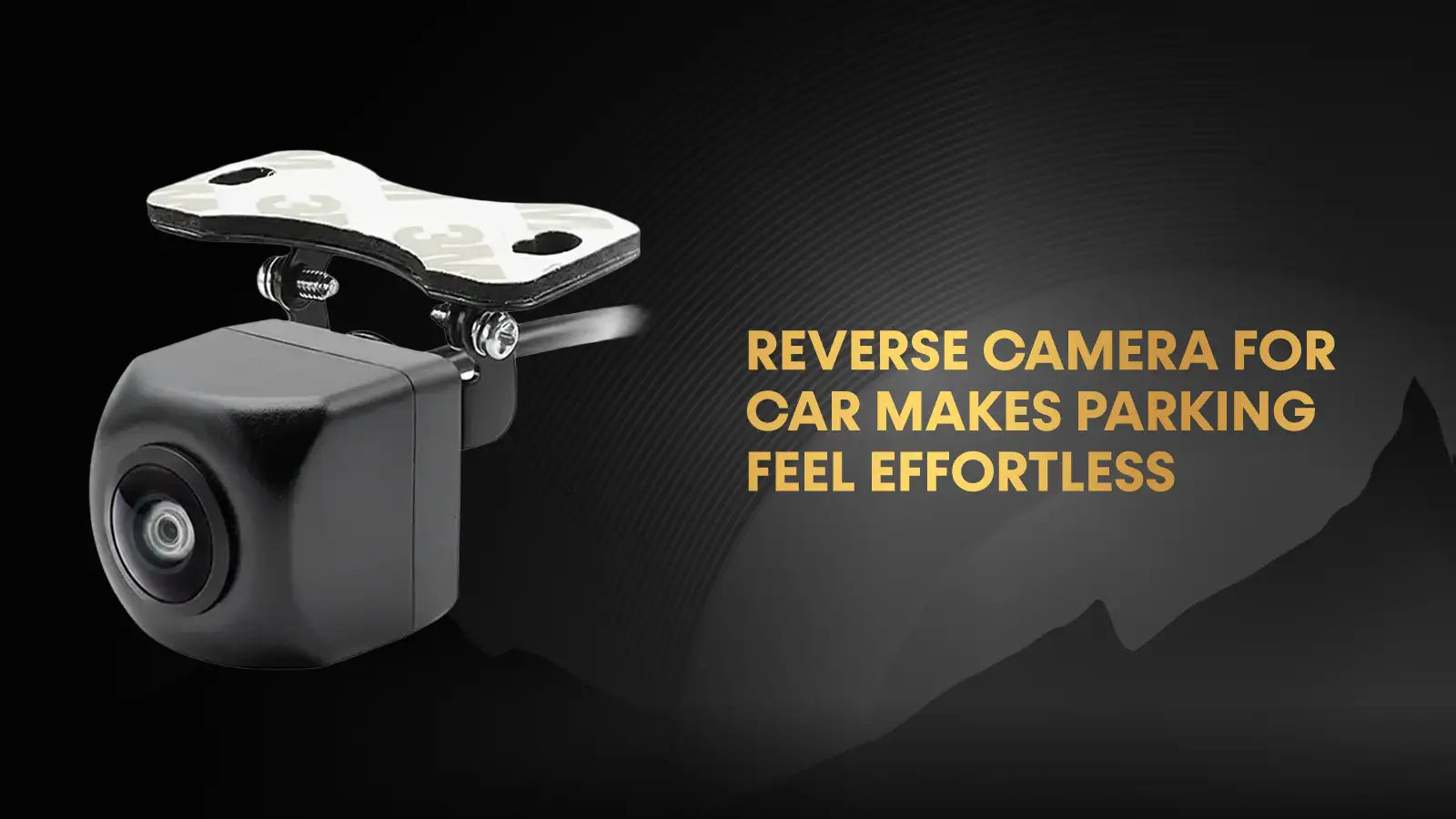
Parking can become stressful when visibility is limited, especially in tight spaces, busy car parks, narrow driveways or areas with pedestrians nearby. A reverse camera for car gives drivers a clearer view of the area behind the vehicle while reversing, making everyday manoeuvring easier and more controlled. Modern reversing cameras can offer wide-angle viewing, high-definition images, night vision, waterproof construction and parking guidelines, depending on the system selected.
What Is a Reverse Camera for Car?
A reverse camera for car is a small camera mounted towards the rear of a vehicle that shows the area behind it on a compatible display. The camera activates when reverse gear is selected, allowing the driver to see obstacles, vehicles, kerbs and other objects that may not be clearly visible through the rear window or mirrors.
Unlike relying only on mirrors, a reversing camera can provide a wider view of the rear area. This can be particularly helpful for larger vehicles, SUVs, vans and cars with restricted rear visibility.
Many modern systems also include parking reference lines. These visual guides can help drivers estimate the vehicle's path when moving into a parking space or reversing through a narrow area.
How Does a Car Reverse Camera Work?
A car reverse camera captures the area behind the vehicle and sends the video signal to a compatible monitor or factory display. In many installations, the system is connected to the vehicle's reverse-light circuit, allowing the screen to switch automatically to the camera view when reverse gear is engaged.
The basic process is straightforward:
- The driver selects reverse gear.
- The camera activates.
- The rear-facing lens captures the surroundings.
- The video signal is sent to a compatible screen.
- The driver uses the displayed image to guide the vehicle.
Some systems use AHD technology for high-definition video, while CVBS cameras are designed for broader monitor compatibility. Compatibility should always be checked before purchasing because an AHD camera requires a compatible AHD display or interface.
Benefits of Installing a Reverse Camera
A reversing camera can make parking and low-speed manoeuvring more convenient while improving the driver's view of the rear surroundings.
Better Rear Visibility
One of the biggest advantages is improved visibility. A camera can reveal areas directly behind the vehicle that may be difficult to see using mirrors alone. Wide-angle models can provide a broader field of view, helping drivers monitor more of the surrounding area.
Easier Parking in Tight Spaces
Parallel parking, reversing into marked bays and manoeuvring around narrow driveways can be easier when the driver has a clear rear-facing image.
Parking guidelines can also help the driver judge positioning and vehicle direction more accurately.
Greater Confidence While Reversing
Limited visibility can make reversing uncomfortable, particularly in unfamiliar locations. Having a live image of the rear area can make low-speed manoeuvres feel more controlled.
Useful for Larger Vehicles
Vans and other larger vehicles can have substantial rear blind spots. A suitable reverse camera can improve rear visibility and make reversing more manageable.
Improved Visibility in Low Light
Some reverse cameras feature night vision or automatic light adjustment technology. These features can help maintain a usable image when daylight is limited.
Protection Against Everyday Parking Scrapes
A clearer view of kerbs, posts and other obstacles can help drivers identify potential hazards before making contact. A camera should still be used alongside mirrors and direct observation rather than as a replacement for them.
Key Features to Look For
The right camera depends on the vehicle, existing display and intended use. Several specifications deserve attention before choosing a system.
Wide Viewing Angle
A wider viewing angle can show more of the area behind the vehicle. Some systems offer viewing angles of up to 170 degrees, which can be useful when manoeuvring in confined spaces.
HD Image Quality
A high-definition camera can provide a clearer picture, helping drivers distinguish obstacles and markings more easily.
Parking Guidelines
Parking lines provide visual references that can assist with positioning. Depending on the system, these may be static or adjustable.
Night Vision
Night vision can be useful for reversing after dark or in poorly lit car parks. Some models use infrared or starlight technology to improve visibility in low-light conditions.
Waterproof Construction
Because a rear-mounted camera is exposed to rain, dirt and changing weather conditions, waterproof construction is an important consideration for long-term use.
AHD or CVBS Compatibility
The camera's video format needs to match the vehicle's monitor or interface. AHD cameras provide high-definition output but require compatible equipment, while CVBS offers wider compatibility with traditional video inputs.
Vehicle-Specific Design
A vehicle-specific camera can provide a cleaner installation and may be designed to fit an existing boot handle, brake light or other factory location. Vehicle-specific reverse camera options are available for various cars and vans.
Common Challenges and Their Solutions
Choosing and installing a reversing camera is generally straightforward, but a few issues can affect performance.
The Camera Does Not Display an Image
This may happen because the camera and monitor use different video formats. Check whether the display supports the camera's signal, particularly when using an AHD camera.
The Image Is Poor at Night
Low-light performance depends on the camera sensor and night vision technology. If night-time visibility is important, choose a camera specifically designed for low-light conditions.
The Camera Does Not Fit Correctly
Universal cameras may require more consideration during installation. A vehicle-specific model can be a better choice when a discreet factory-style appearance is important.
Parking Lines Appear Incorrect
Parking guidelines need to correspond with the vehicle's positioning and camera angle. Incorrect installation or adjustment can make the lines less useful.
Installation Becomes Complicated
Although some systems can be installed by people with suitable technical knowledge, wiring a camera into the vehicle's electrical and display systems requires care. Professional installation can help ensure correct integration and avoid unnecessary damage.
Practical Applications of a Reversing Camera
A reverse camera is useful in more situations than simply parking in a supermarket car park.
Residential parking: Narrow driveways can make reversing difficult when walls, gates or parked vehicles restrict visibility.
Busy car parks: Pedestrians and other vehicles can appear unexpectedly while reversing.
Parallel parking: A rear-facing display can help drivers judge the available space and distance from surrounding vehicles.
Commercial vans: Larger vans often have reduced rear visibility, making camera systems particularly useful for regular reversing.
Tight urban streets: A wider rear view can assist with low-speed manoeuvring where space is limited.
Trailer and larger vehicle use: Suitable high-definition rear cameras can provide additional visibility for buses, trucks, trailers and other larger vehicles.
Reverse Camera Types Compared
| Camera Type | Main Advantage | Best Suited To |
|---|---|---|
| Universal reverse camera | Flexible installation | Different vehicle types |
| Vehicle-specific camera | Neat, tailored fit | Specific makes and models |
| HD AHD camera | High-definition image | Compatible AHD displays |
| CVBS camera | Broad compatibility | Compatible traditional monitors |
| Brake light camera | Discreet rear installation | Vans and commercial vehicles |
| Fisheye camera | Very wide viewing angle | Tight parking areas |
The best option depends on the vehicle's design, existing screen, installation location and required image quality.
Factors to Consider Before Choosing
Before purchasing a reverse camera for car use, check several important points.
Vehicle compatibility: Confirm that the camera physically fits the vehicle and works with its electrical and display systems.
Screen compatibility: Check whether the existing infotainment screen, Android unit or aftermarket monitor supports the camera's video format.
Viewing angle: A wider angle can improve rear coverage, but the image may appear more curved depending on the lens design.
Image resolution: Choose an appropriate resolution based on the display and the level of detail required.
Night-time performance: Consider infrared, starlight or other low-light features if the vehicle is frequently driven after dark.
Weather resistance: A waterproof camera is important because the unit is exposed to rain, road spray and dirt.
Installation method: Consider whether you want a universal mounting position or a camera designed for a specific part of the vehicle.
Professional fitting: If you are unsure about wiring or compatibility, professional installation can provide a safer and cleaner result.
Common Questions People Ask
Is a reverse camera worth having on a car?
Yes, a reverse camera can be a useful driving aid because it improves the driver's view behind the vehicle during low-speed manoeuvres. It is particularly helpful when rear visibility is restricted.
Can I add a reverse camera to an existing factory screen?
In many cases, yes. A suitable interface can allow a compatible camera to work with the original factory display without replacing the entire screen. Compatibility depends on the vehicle and factory system.
Do reverse cameras work at night?
Many modern cameras include night vision or low-light technology. However, performance varies between models, so the camera's sensor and night-vision specifications should be checked before purchase.
Are universal reverse cameras suitable for every vehicle?
Not necessarily. Universal cameras can work across different vehicles, but the mounting position, wiring and screen compatibility still need to be checked.
Can a reverse camera replace parking sensors?
No. A camera and parking sensors provide different types of assistance. A camera gives a visual view, while sensors can provide proximity warnings. Using both can provide complementary information.
Do all reverse cameras have parking lines?
No. Parking guideline availability depends on the camera or connected display. Some systems allow the guidelines to be switched on or off, while others may offer adjustable or dynamic lines.
Is professional installation necessary?
It is not always necessary, but professional installation can be beneficial when the system requires integration with the vehicle's wiring, factory display or other electronics.
Key Takeaways
- A reverse camera provides a clearer view of the area behind a vehicle.
- Wide-angle lenses can improve rear coverage during parking.
- HD cameras can provide greater image detail when paired with a compatible display.
- Night vision is useful for reversing in dark or poorly lit areas.
- Waterproof construction is important for an exterior-mounted camera.
- AHD and CVBS cameras require different compatibility considerations.
- Vehicle-specific cameras can provide a more discreet installation.
- A reverse camera should complement, rather than replace, mirrors and direct observation.
- Professional installation can be useful for complex vehicle integrations.
Also, Read Digital Car Dashboard Upgrades for Modern UK Drivers
Conclusion
A reverse camera for car can make everyday parking and reversing feel far more manageable by giving drivers a clearer view of areas that are difficult to see through mirrors alone. Features such as wide-angle lenses, HD imaging, night vision, waterproof construction and parking guidelines can further improve the usefulness of a system when matched correctly to the vehicle and display. For drivers looking to improve rear visibility while maintaining a clean, integrated installation, Autostyle UK offers a range of reverse camera solutions for different vehicles and display setups.


