


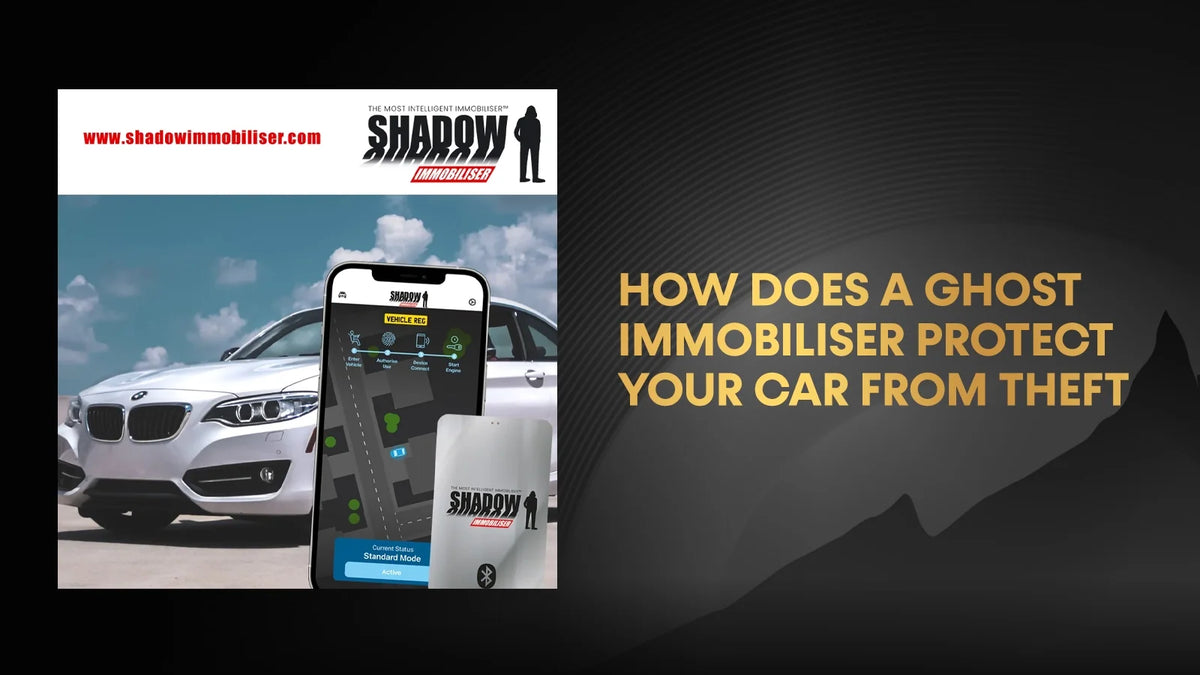
A ghost immobiliser protects your car by adding a hidden electronic lock to its internal systems. Even if a thief copies your key signal or plugs a device into your car, the engine will not start until the right PIN is entered using your car’s own buttons.
That matters because modern thieves rarely break a window and hot-wire an ignition. They use relay devices, programming tools and electronic attacks that can defeat factory security in minutes. This guide explains what a ghost immobiliser is, how it works, what it can and cannot stop, and what to check before fitting one.
What Is a Ghost Immobiliser
A ghost immobiliser is an aftermarket, electronic anti-theft device that is installed inside your vehicle. It stops the engine from running unless you enter a personal PIN code.
The name comes from its main feature. There is no extra key fob, no dashboard light and no visible hardware. Instead of a separate remote, you enter a sequence using buttons already in the car, such as steering wheel controls, window switches or dashboard buttons.
It works alongside your factory immobiliser and does not replace it. Think of it as a second lock that relies on something a thief cannot clone, which is a code stored in your head. For a wider look at protecting your vehicle, see our car security and anti-theft guide.
How Does a Ghost Immobiliser Work
Modern cars are controlled by a network of computers that constantly send messages to each other. This network is commonly called the CAN bus. A ghost immobiliser connects to this network and takes part in the messages that allow your car to start and run.
Here is the process in simple steps:
- Installation. A technician connects the unit to the vehicle’s data network and hides it within the car. You choose a PIN made of button presses.
- Normal state. When you leave the car, the system returns to a protected state without any action from you.
- Authentication. When you get in, you enter your PIN using the chosen buttons. The system recognises the correct sequence.
- Engine permission. Once verified, the unit stops blocking the start process and the car runs normally.
- Wrong or missing PIN. The unit interferes with the data the engine needs. The car may crank briefly, then cut out, or it may not start at all.
The key point is that this happens inside the car’s wiring, not through a radio signal. A relay attack works by amplifying the signal from your key fob, and a ghost immobiliser does not rely on that signal, so there is nothing for a relay device to amplify. We explain this threat in more detail in our guide to how relay attacks work and how to stop them.
Why Factory Security Alone Is Not Always Enough
Most modern cars have a factory immobiliser, which checks that a valid key or fob is present. That check is exactly what thieves target. Common methods include:
- Relay attacks: Devices capture and extend the signal from a keyless fob inside your house to unlock and start the car outside.
- Key programming through the OBD port: Thieves plug a tool into the OBD port and program a blank key to the car.
- CAN injection: Thieves access the vehicle’s data network, sometimes through exterior wiring, and send fake messages that tell the car a valid key is present. Our explainer on CAN injection car theft covers this in depth.
A ghost immobiliser adds a check that does not depend on the key. Even if the factory system has been fooled into thinking a valid key is present, the engine still needs your PIN.
Benefits of a Ghost Immobiliser
- Works without a fob. There is nothing to lose, steal, copy or drain a battery on.
- Not affected by relay devices. It does not rely on a wireless signal.
- Hidden and discreet. Thieves cannot easily spot or remove what they cannot see.
- Adds a layer to factory security. It guards against both signal-based and wiring-based attacks.
- Familiar to use. Entering a PIN using the car’s own buttons becomes habit within a few days.
- Possible insurance benefits. Some insurers recognise approved security devices, though policies vary widely.
Key Features and Characteristics
- Personal PIN. You choose a sequence, and it can usually be changed.
- Uses existing buttons. Controls differ by car model.
- No visible hardware. No fob, no dashboard unit, no wiring on show.
- Automatic protection. It re-arms itself without you pressing anything.
- Professional installation. Fitting is usually done by a trained installer, since it involves the vehicle’s electronics.
- Possible convenience modes. Many units offer a way to hand the car to a mechanic or valet without sharing your main PIN. Check the exact options with your installer.
Common Challenges and Solutions
Forgetting your PIN. This is the most common worry. Choose a sequence you can remember and keep the installer’s recovery details somewhere safe, not in the car.
Handing the car to a garage or valet. Ask your installer how the unit handles temporary access, so you never need to share your main code.
Warranty concerns. A properly installed unit should not damage the car, but you should confirm with your installer and check your manufacturer’s warranty terms before fitting.
Compatibility. Not every car supports every unit. Always check the vehicle compatibility list before buying, especially for newer hybrid and electric models.
False confidence. A ghost immobiliser makes a car much harder to steal, but nothing is theft-proof. Thieves can still steal the car by towing it, loading it on a trailer or taking parts.
Practical Applications
- Keyless entry cars. These are the most common target for relay attacks.
- Popular and high-value models. Cars that thieves actively target are the strongest candidates.
- Cars parked on the street. A vehicle that is out of sight overnight has greater exposure.
- Families sharing a car. A simple PIN is easier than managing extra fobs.
- Older cars with weak factory security. Even without keyless entry, an extra layer helps.
Real-world example: You park outside your house at night with the fob in the hallway. A thief amplifies the fob signal, opens the door and presses start. Without a ghost immobiliser, the car starts. With one, the engine fails to start because the PIN was never entered.
How a Ghost Immobiliser Compares with Other Security Options
| Feature | Ghost Immobiliser | Factory Immobiliser | Steering Lock | GPS Tracker |
|---|---|---|---|---|
| Stops engine starting | Yes | Yes, if the key is valid | No | No |
| Resists relay attacks | Yes | No | Not directly | No |
| Visible deterrent | No, it is hidden | No | Yes | No |
| Helps recover a stolen car | No | No | No | Yes |
| Needs a fob or battery | No | Yes | No | Yes, power |
| Best used | Alongside others | Standard | Visual deterrent | Recovery |
The best protection comes from layering. A ghost immobiliser prevents theft, a steering lock deters opportunists, and a tracker helps recover the car if the worst happens. If you are comparing options, read our breakdown of steering locks versus electronic immobilisers. Independent security testing bodies such as Thatcham Research are also a useful source of vehicle security information.
Factors to Consider Before Choosing One
- Vehicle compatibility. Confirm your exact make, model and year are supported.
- Installer quality. Use an experienced, reputable installer, since poor fitting is the biggest risk.
- Warranty and insurance. Ask your insurer whether they recognise the device and whether you must declare it.
- Your driving pattern. If you lend your car often, check how temporary access works.
- Your parking situation. Street parking raises the value of added security.
- Support and aftercare. Check what help is available if you forget your PIN or sell the car.
- Long-term value. Consider how much risk it removes compared with the likelihood of theft for your model.
FAQs
1. Can thieves bypass a ghost immobiliser?
It is much harder, but no device is unbeatable. Because it works on the car’s internal network and needs a PIN, relay and key-programming attacks are not enough on their own.
2. Is a ghost immobiliser worth it?
For cars that are commonly targeted, particularly keyless models parked outside, many owners consider it a sensible extra layer. It matters less for a car kept in a locked garage with minimal theft risk.
3. Does it stop a thief from towing my car away?
No. It prevents the engine from running, but a car can still be moved by other means. Pair it with a tracker and sensible parking for better coverage.
4. Can I fit a ghost immobiliser myself?
It is not recommended. Installation involves the vehicle’s electronics, and a mistake can cause faults. A trained installer is the safer choice.
5. Will a ghost immobiliser affect my car’s warranty?
A correctly installed aftermarket device should not automatically void a warranty, but terms vary. Check with your manufacturer or dealer before fitting.
6. What happens if I forget my PIN?
The car will not start. Your installer or the supplier can advise on recovery, which is why you should keep your recovery details somewhere safe and away from the car.
7. Does it need a fob, and will it drain my car battery?
It needs no separate fob and draws its power from the car. Quality units use very little power, but if you leave a car unused for long periods, ask your installer about standby consumption.
8. Can I use it on hybrid or electric cars?
Compatibility depends on the model. Always check the supported vehicle list with the installer before buying.
Key Takeaways
- A ghost immobiliser blocks the engine until you enter a PIN using your car’s own buttons.
- It uses the car’s internal network rather than a radio signal, so relay attacks cannot beat it.
- It adds to factory security and does not replace it.
- It does not stop towing or theft of parts.
- Professional installation and a compatibility check are essential.
- The strongest protection is layered: immobiliser, visible deterrent, tracker and sensible parking.
Also, Read How LED Lights Inside Car Cabins Improve Your Driving Experience
Conclusion
A ghost immobiliser protects your car by removing the weakness thieves rely on. It does not depend on a fob or wireless signal, and it stays hidden while demanding a PIN only you know. It is not a guarantee, but combined with other sensible precautions it makes your car a much harder target. If you are ready to fit a ghost immobiliser, contact Autostyle UK today to check compatibility or book a professional installation.


