


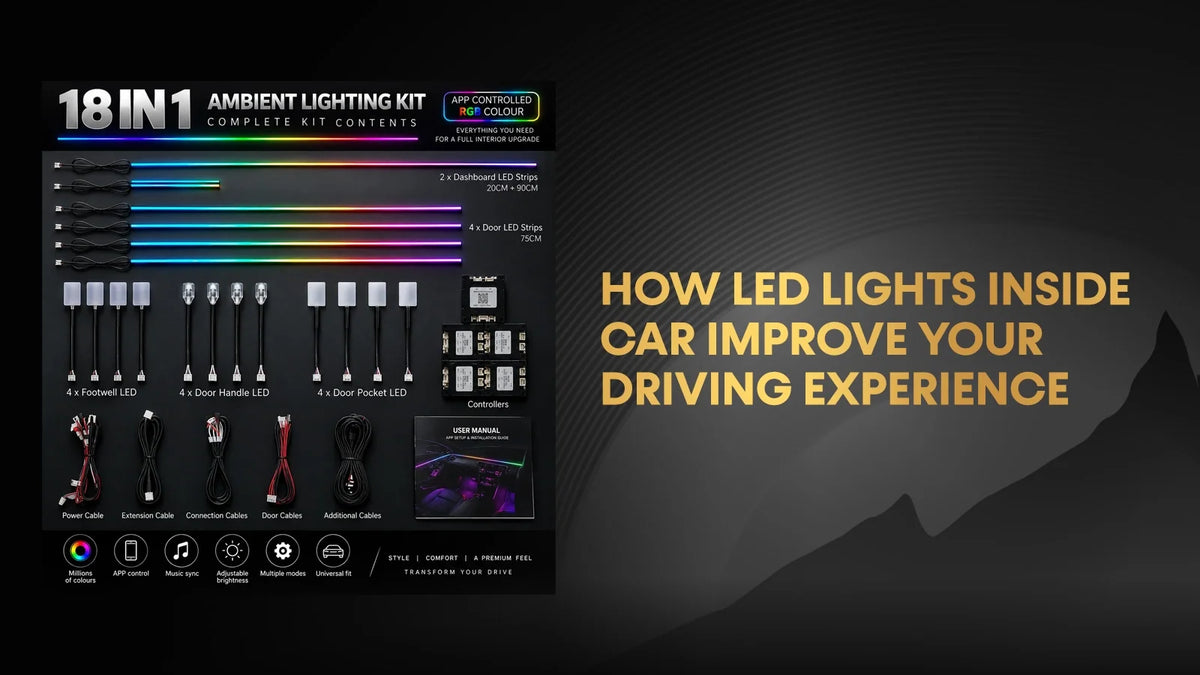
LED lights inside car cabins make everyday driving easier, more comfortable and more personal. They give clearer visibility when you are looking for something in the dark, use far less power than traditional bulbs, last for years and let you set the mood of the interior with colour and brightness. Used sensibly, they also make a car feel newer and more modern without any major modification.
The gains go beyond looks. A brighter dome light helps you find a phone or parking ticket. Soft footwell lighting makes getting in and out at night safer. Gentle ambient strips reduce the harsh contrast between the dashboard glow and a dark cabin. This guide covers how interior LEDs work, the main types, what the benefits really are, the safety and legal points to keep in mind and how to choose and fit them properly.
What Are LED Lights Inside Car Interiors?
LED stands for light emitting diode. Instead of heating a thin filament as old bulbs do, an LED produces light when current passes through a semiconductor. That makes it more efficient, cooler to run and much longer lasting.
Interior LED lighting usually falls into three groups:
- Replacement bulbs: LED versions of the standard dome, map, boot, glovebox and door courtesy bulbs.
- Strip and accent lighting: Flexible LED strips placed under seats, dashboards or door panels.
- Ambient lighting kits: Fibre optic or multi-zone systems that run along the dashboard and doors, often with colour control.
How Do Interior LED Lights Work?
Interior LEDs connect to the car’s 12 volt electrical system. Replacement bulbs simply fit into the existing holder. Strips and ambient kits usually draw power from the cigarette lighter socket, a USB port or a fuse tap in the fuse box.
Many accessory kits include a small controller or app. These let you change colour, brightness and effects. Better kits also include a dimmer, because a light that is perfect in a parked car can be far too bright on a dark road at night.
Benefits of LED Lights Inside Car
Better visibility inside the cabin
LEDs produce a clean, bright white light that makes it easier to read maps, find items and check the cabin. Compared with the yellowish glow of a worn halogen or incandescent bulb, the difference is obvious.
Lower power use
LEDs draw much less current than traditional bulbs. For a dome light left on accidentally, this means a lower chance of a flat battery. The saving is small in day to day driving, but it reduces strain on the electrical system.
Longer life
A typical LED can last many thousands of hours, so you may never replace the bulb again during your ownership of the car.
Cooler operation
LEDs generate very little heat. That is useful for plastic housings, headlining materials and tight spaces where an older bulb could discolour or warp trims over time.
A more comfortable cabin atmosphere
Soft, indirect lighting reduces the stark contrast between bright screens and a dark interior, which can feel more relaxing on long night journeys. Warm tones often feel calmer, while cool white feels sharper and more modern.
Personalisation
Colour options let you match the lighting to your car’s upholstery, trim or personal taste without changing any permanent parts.
Types of Interior LED Lighting Compared
| Type | Best for | Typical difficulty | Main limitation |
|---|---|---|---|
| LED replacement bulbs | Brighter dome, map and boot lighting | Easy | Must match bulb type and polarity |
| LED strips (USB or 12 volt) | Footwell and under-seat glow | Easy to moderate | Visible wiring if poorly routed |
| Fibre optic ambient kit | Dashboard and door accents | Moderate | More fitting time |
| Factory style ambient system | Seamless look | Difficult | Often car specific and costly |
| Halogen or incandescent (for reference) | Original equipment | Easy | Dim, hot, short lived |
Where to Fit LED Lights Inside a Car
Different locations serve different purposes:
- Dome and map lights: Best for practical brightness and reading.
- Footwell: Gentle light that helps you see the floor and step in and out without lighting the whole cabin.
- Door panels and puddle lights: Help you judge the kerb and avoid stepping into water.
- Dashboard and centre console: The classic ambient look.
- Boot and glovebox: Useful for loading and finding items.
- Under-seat: Helpful for rear passengers and for finding dropped objects.
Do LED Lights Inside Car Cabins Improve Safety?
They can, if used carefully. Better lighting in the doors, footwell and boot reduces trips and fumbling. A bright, clear dome light helps when checking a child in the back.
The risk is the opposite. Bright or coloured lighting while driving at night can hurt your night vision and reflect in the windscreen and mirrors. The safest approach:
- Keep brightness low, or fit a dimmer.
- Avoid bright white or blue light near the driver’s line of sight.
- Choose warmer or softer tones for night driving.
- Turn off flashing or colour changing effects while the car is moving.
- Make sure no light reflects in the windscreen or side windows.
Are Interior LED Lights Legal in the UK?
Interior lighting is not tightly regulated in the same way as headlights, but common sense and the law still apply. In general, lighting should not dazzle or distract other road users, and you should avoid effects that resemble emergency vehicles. Blue lights and flashing lights visible from outside the car can cause problems, and red light visible from the front is restricted.
Keep these points in mind:
- Make sure no interior light is visible from outside in a way that could confuse or dazzle others.
- Do not use flashing or strobing effects while driving.
- Do not obstruct the driver’s view or any dashboard warning light.
- Check the latest guidance from the DVSA and GOV.UK, or ask your insurer, if you are unsure.
If you are unsure whether a specific setup is acceptable, ask a qualified installer or your local MOT station.
How to Choose LED Lights for Your Car
Check the bulb type. Interior bulbs come in several fittings, such as festoon, T10 wedge and BA9S. Check your owner’s manual or the old bulb.
Choose the right brightness. Look for lumens or the manufacturer’s brightness description. More is not always better in a small cabin.
Pick the colour temperature. Warm white (about 3000K) feels softer. Neutral to cool white (about 4000K to 6000K) looks cleaner and brighter. Very blue lights can look harsh and may cause glare.
Look for canbus compatibility. Many newer cars monitor bulbs electronically and show a warning if the load is too low. Canbus ready or error free LEDs avoid this.
Consider control options. If you want colour changing, look for a dimmer or app control that remembers settings.
Check the build quality. Look for sturdy wiring, proper adhesive, heat management and clear fitting instructions.
Match the power source. Plug in kits are simple. Hardwired kits look cleaner but take more time.
How to Install LED Lights Inside Your Car
For replacement bulbs:
- Switch off the ignition and lights.
- Remove the lens cover with a plastic trim tool.
- Pull out the old bulb.
- Push in the LED. If it does not light, remove it, rotate it 180 degrees and try again, because LEDs are polarity sensitive.
- Refit the cover.
For strips and ambient kits:
- Clean the surface with isopropyl alcohol so the adhesive grips.
- Test the strip before sticking it down.
- Route wires neatly under trims, away from pedals, seat rails and airbag areas.
- Use a fuse tap or a plug in power adapter.
- Secure loose wiring with cable ties.
If you are not comfortable working near the fuse box or airbag components, get a professional to fit them.
Common Problems and How to Fix Them
- Flickering: Usually a loose connection, a low quality driver or a canbus issue. Try an error free LED or a load resistor.
- Dashboard warning: Caused by low electrical load on bulb monitoring systems. A canbus ready bulb typically solves it.
- Light does not work: Check polarity, then the fuse.
- Dim output: Often a poor quality LED or a weak contact in the bulb holder.
- Faint glow when the light is off: Caused by small leakage currents. A resistor or a better quality LED corrects it.
- Strip falls off: Surfaces were not clean or the adhesive was poor. Add clips.
- Battery drain: Make sure hardwired kits switch off with the ignition or use a switched fuse.
Common Mistakes to Avoid
- Buying bulbs without checking the fitting type.
- Choosing very bright blue white lights that cause glare.
- Using a colour changing mode while driving.
- Running wires near moving parts or airbags.
- Overlooking insurance, because modifications can matter to some insurers.
- Buying the cheapest strips with weak adhesive and no fuse protection.
Common Questions People Ask
Do LED lights inside a car drain the battery?
Properly fitted LEDs use very little power, so they are unlikely to drain the battery. Hardwired kits that stay on with the ignition off can.
Can I use any LED strip inside my car?
Choose strips rated for 12 volts and made for automotive use. Mains or low quality strips can overheat or fail.
Do interior LEDs affect the car warranty?
Simple bulb swaps rarely do, but tampering with wiring can complicate warranty claims. Check your manufacturer’s terms.
Will interior LEDs distract me while driving?
They can if they are too bright or colourful. Keep them dim and avoid effects that move or flash.
FAQs
1. Are LED interior lights brighter than normal bulbs?
Usually yes. Many LEDs produce a cleaner and brighter light while using less power. Pick a brightness that suits the size of your cabin.
2. Can I fit LED lights inside my car myself?
Replacement bulbs and plug in strips are easy to fit at home. Hardwired kits need basic electrical care.
3. What colour is best for interior car lighting?
Warm or neutral white suits most drivers. Softer colours such as amber or a gentle blue are popular for ambient accents, but keep them low in brightness.
4. Do I need to tell my insurer about interior LED lights?
Minor bulb changes usually do not matter, but if you add significant modifications, it is sensible to mention them.
5. How long do interior car LEDs last?
Quality LEDs commonly last for many thousands of hours, often far longer than the bulbs they replace.
6. Why does my LED bulb flicker or show a warning?
It is usually due to low load on the bulb monitoring system. A canbus compatible LED normally solves it.
7. Can LED lights inside a car damage the interior?
Not normally. They run cool, which is gentler on plastics and fabrics than older bulbs.
Key Takeaways
- Interior LEDs improve visibility, last longer and use less power.
- The main options are replacement bulbs, LED strips and ambient kits.
- Match the bulb fitting, brightness and colour temperature to your car.
- Choose canbus compatible parts for newer vehicles.
- Keep lighting dim and non distracting while driving.
- Avoid flashing, blue or dazzling effects that could cause problems with other road users.
Also, Read What Is a Digital Cluster and How Does It Work in Cars
Conclusion
Good LED lights inside car interiors improve both comfort and practicality, from clearer reading light to a softer, more relaxing cabin at night. Choose the right fitting, keep the brightness sensible, install the wiring neatly and treat safety and legal rules as seriously as style. If you are ready to browse lighting options for your car, Autostyle UK has a lighting collection that is a good place to start.


